An experienced electrophysiologist at the table while decisions are still
reversible — whether the question is a catheter design, a training gap, or
a study endpoint that won't hold up to review.
01
Clinical & Technical Advisory
Practicing-EP perspective on catheter, mapping, and energy-delivery technology —
brought in early enough to change the outcome rather than validate it after the fact.
Device and catheter design review
Advisory board participation
Workflow and human-factors assessment
Clinical landscape analysis
02
Physician Education
Case-based teaching built for how electrophysiology is actually practiced —
from fellowship curricula to hands-on technology sessions.
Procedural education and case support
Hands-on technology demonstration sessions
Fellowship and CME curriculum design
Simulation-based training programs
03
Evidence & Study Support
Getting the science right before it goes to a journal, a regulator, or a payer —
from endpoint selection to the sentence reviewers will stop on.
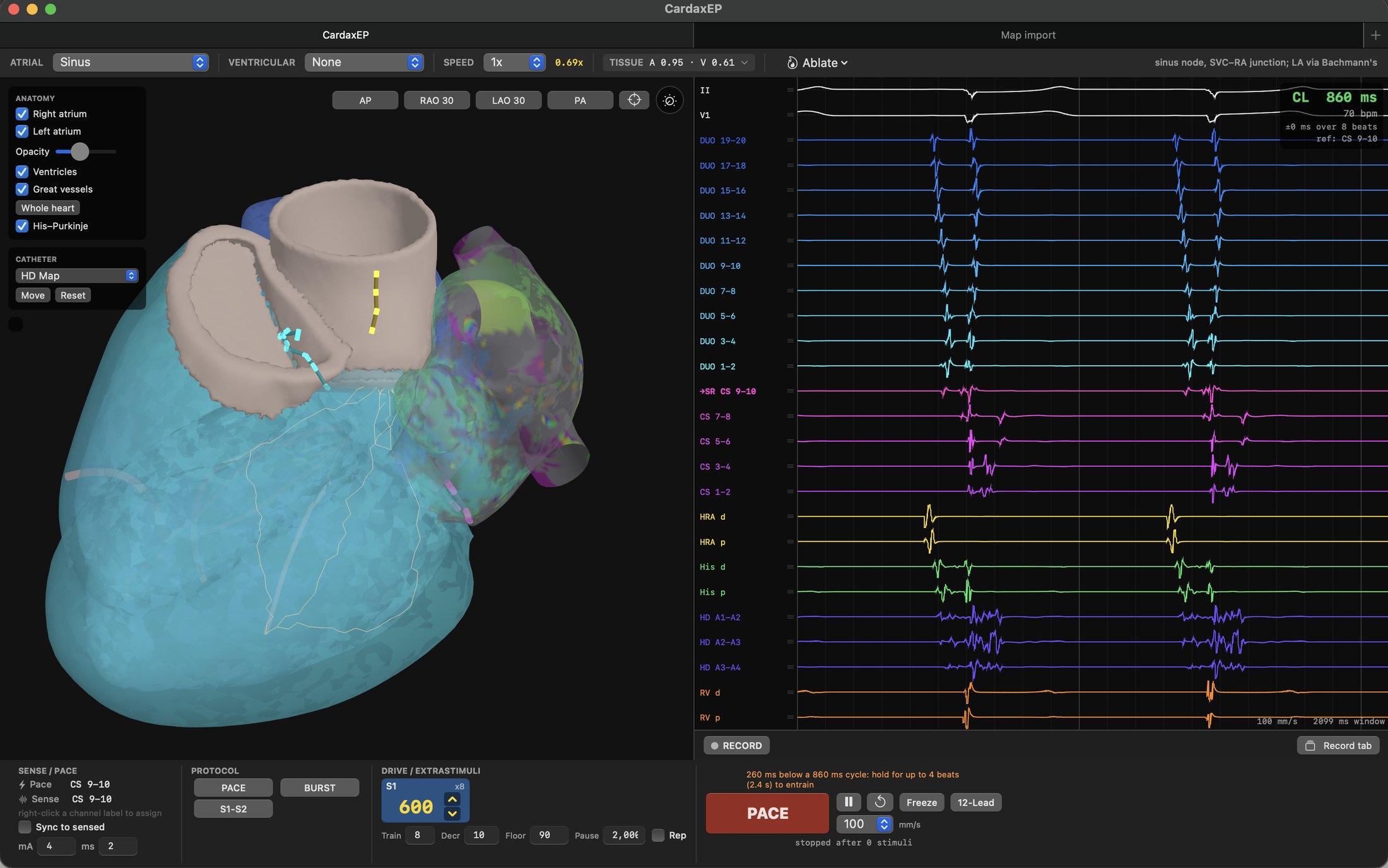
Four-chamber cardiac simulation with a complete virtual electrophysiology
laboratory around it. Atria, ventricles, and the conduction system in one
model — with catheters, electrograms, pacing, and imaging that behave the
way they do in the lab.
The gap between reading about reentry and seeing
a circuit collapse under a well-placed lesion is enormous. CardaxEP is a place
to close it — where fellows can be wrong safely, engineers can iterate
quickly, and hypotheses can be tested before anyone touches a patient.
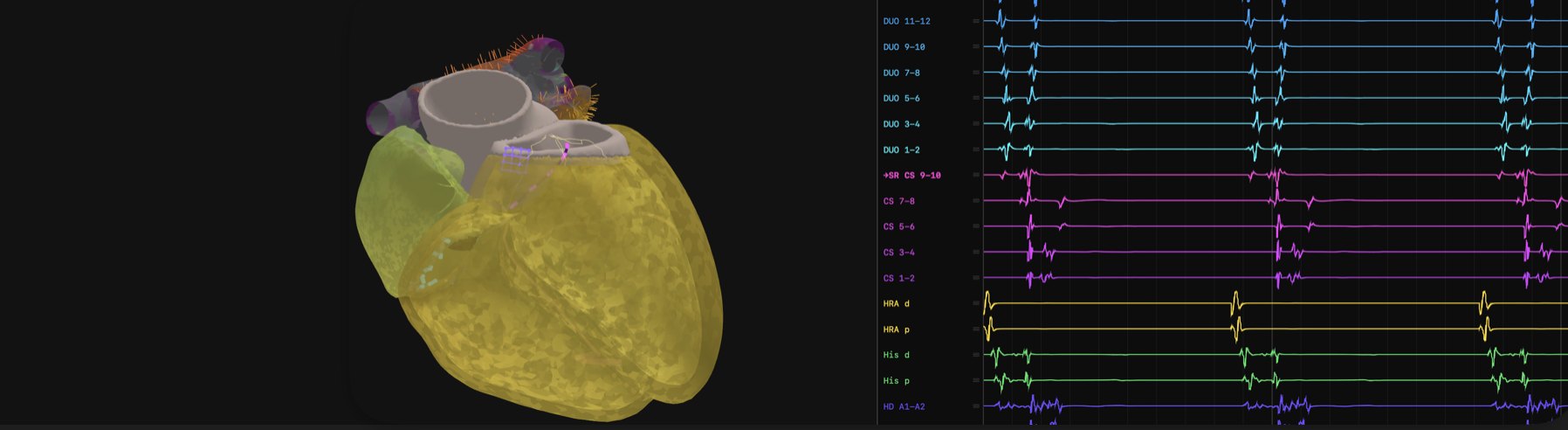
Four-chamber model, sinus rhythm — surface ECG, multipolar,
coronary sinus, His, high-density mapping and right ventricular channels live.
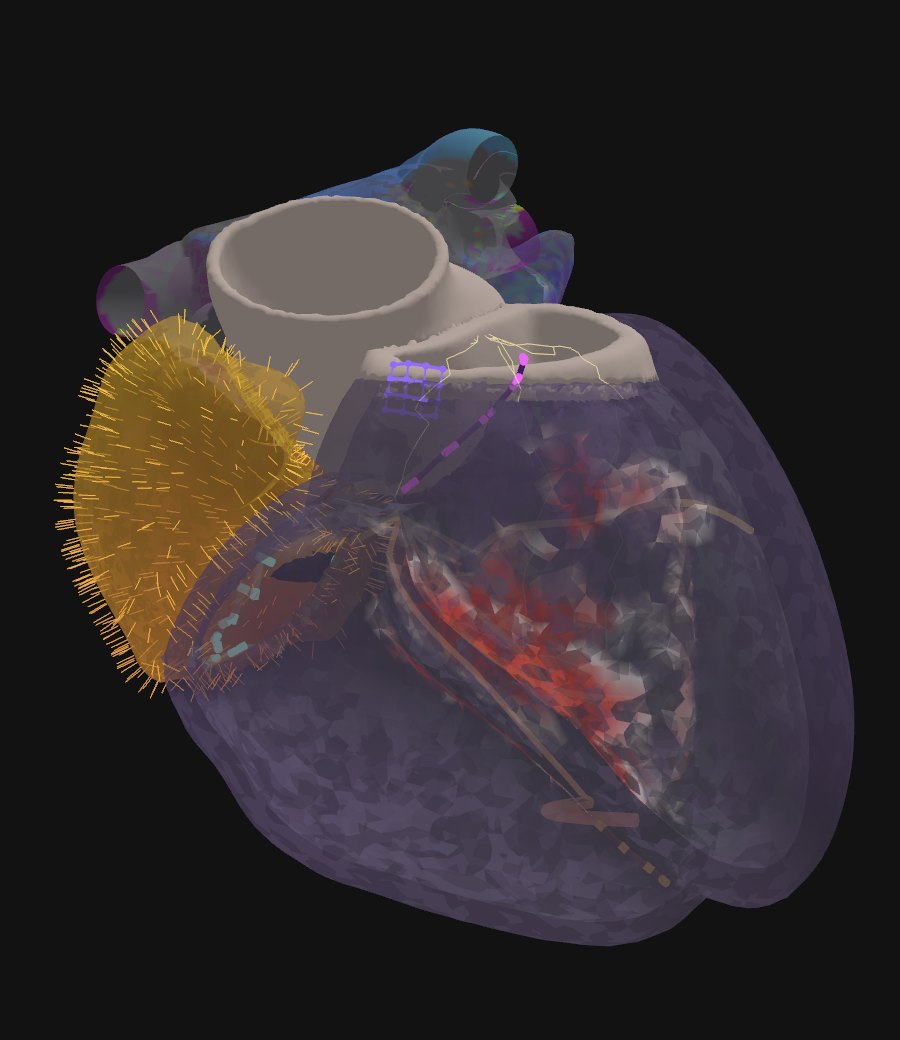
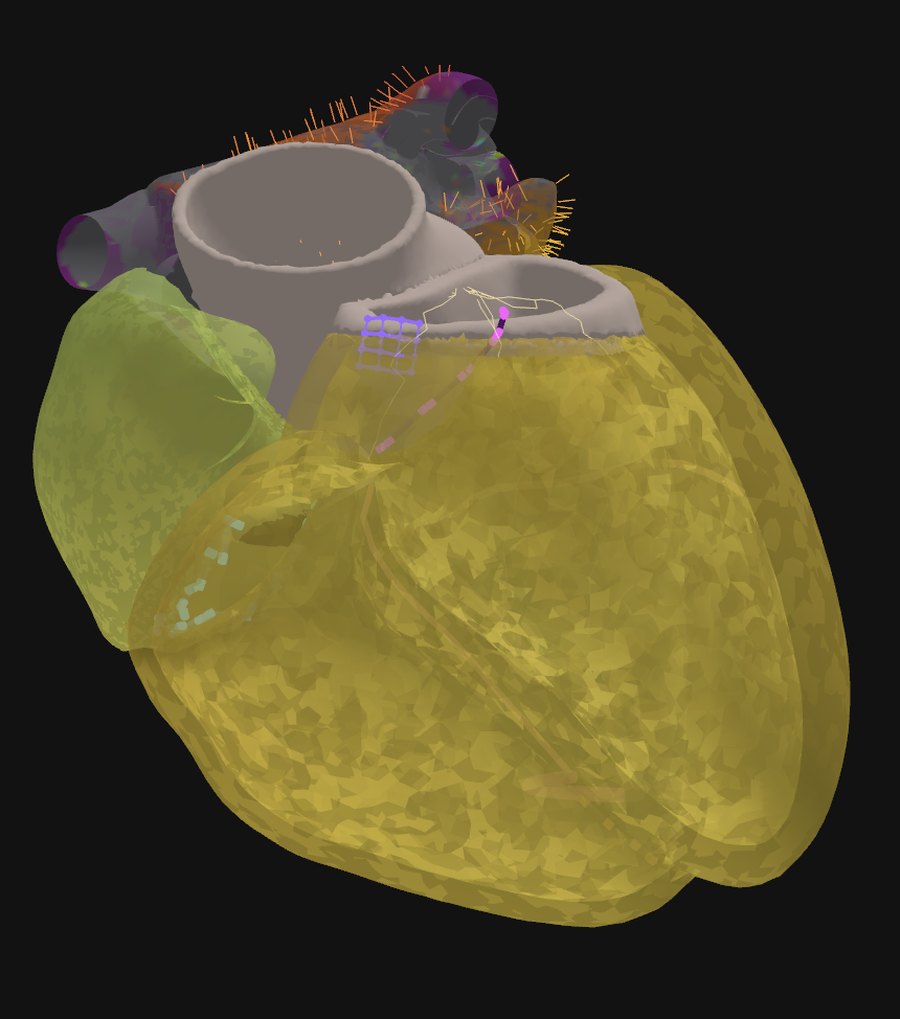
Whole-heart physiology
Atrial, ventricular, and conduction-system activation simulated together, so atrioventricular relationships emerge rather than being scripted.
The full recording system
Surface ECG, multipolar, coronary sinus, His, high-density mapping and ventricular channels — read the same way you would in the lab.
Programmed stimulation
Drive trains, extrastimuli, burst pacing and entrainment from any electrode, with the physiology responding in kind.
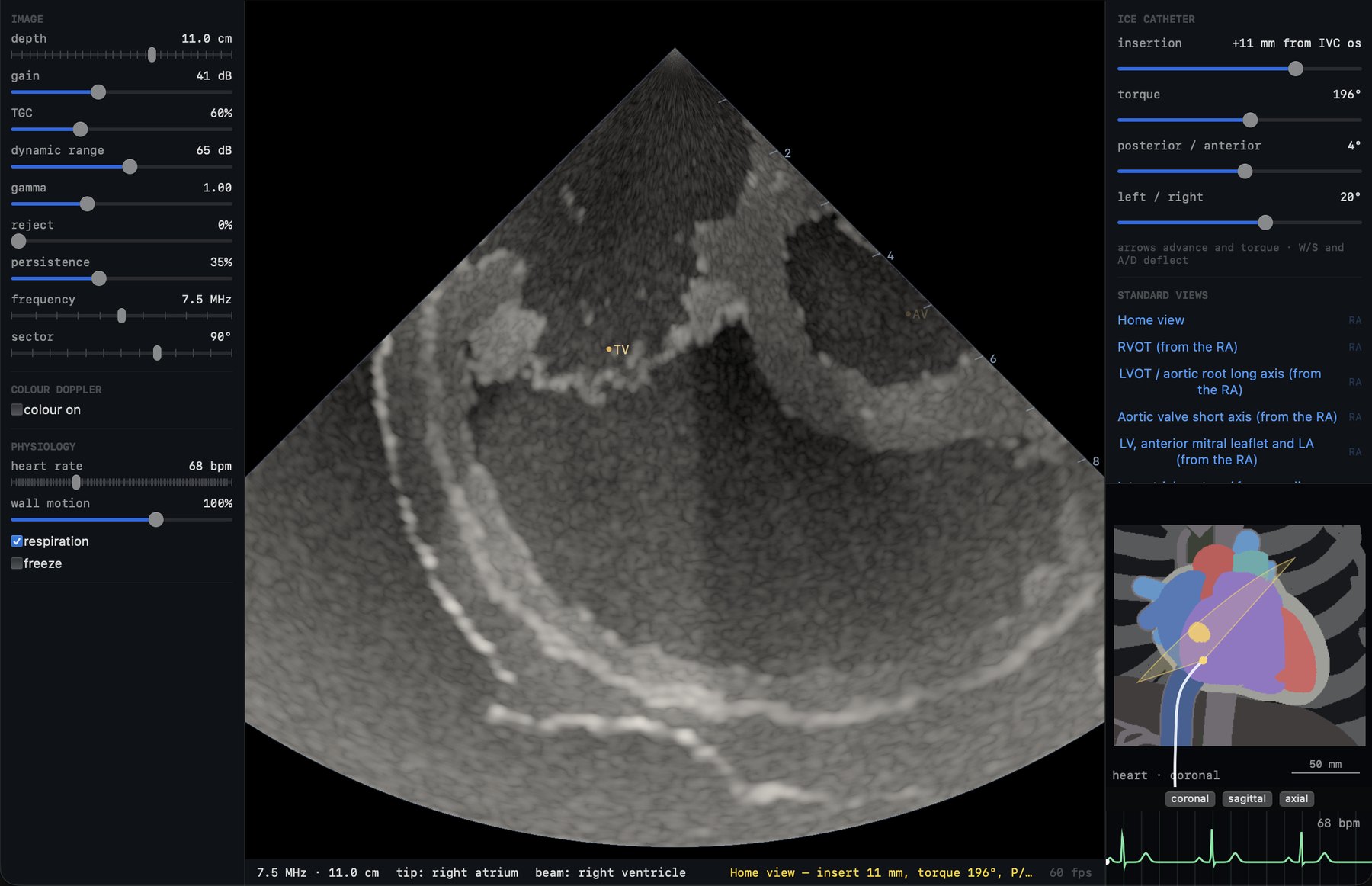
Simulated intracardiac imaging
A steerable intracardiac echo module rendered from the same anatomy, for catheter manipulation and standard-view training.
Mapping and ablation
Build activation maps, place lesions, and watch the circuit respond — block, slow, reorganize, or terminate.
Tunable substrate
Tissue properties move from normal toward diseased, so a single anatomy yields many distinct cases.
Conduction system · high-density atrial vectorsWhole-heart activationSimulated intracardiac echocardiography · catheter steering · standard views
CardaxEP is an educational, research, and technology-demonstration platform. It is not
a medical device and is not intended for diagnosis, treatment planning, or clinical
decision-making.
Research
Toward the digital twin.
The same engine that powers training is being developed as a research tool:
simulation informed by an individual patient's anatomy and electrophysiology,
to ask what a specific substrate will do before it is ablated.
Patient-specific modelingBuilding simulations from clinical mapping and imaging data rather than a generic heart.
Mechanism and substrateStudying how reentrant circuits form, sustain, and fail in computational models.
Validation against the labComparing simulated behavior with clinical recordings to earn trust in the model.
Who we work with
Industry, academia, and education.
Medical device industry
Ablation, mapping, and imaging teams who want an electrophysiologist's
perspective while decisions are still reversible.
Design inputAdvisory boardsTech demonstrations
Research collaborators
Academic and computational groups working on arrhythmia mechanisms,
patient-specific modeling, and simulation validation.
Digital twinsComputational EPValidation
Training programs
Fellowship directors and simulation centers building curricula with
somewhere safe to make the mistakes that actually teach.
Simulation curriculaCase librariesAssessment
Contact
Correspondence.
Most engagements are arranged through established institutional and industry
channels. For general correspondence, research collaboration, or CardaxEP
inquiries, use the form or write directly.